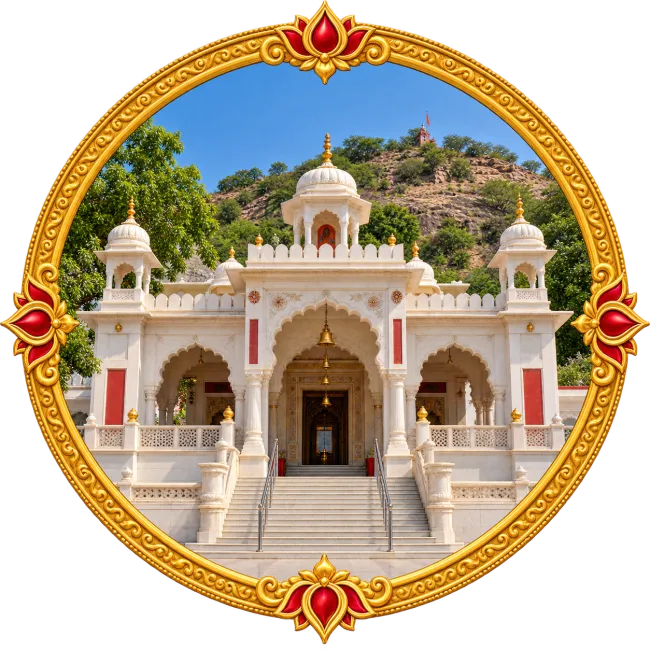
Galtaji Temple, Jaipur
Visit Galtaji Temple in Jaipur, an ancient Hindu pilgrimage centre famous for its sacred water tanks, natural springs, historic temples, and beautiful location among the Aravalli Hills. Popularly known as the Monkey Temple, this spiritual complex attracts devotees, pilgrims, photographers, and travellers throughout the year.
About Galtaji Temple Jaipur
Galtaji Temple is a historic Hindu pilgrimage site situated between the rocky hills on the eastern side of Jaipur, Rajasthan. The temple complex contains several shrines, pavilions, natural springs, and sacred kunds where pilgrims traditionally take a holy bath.
The pilgrimage site is primarily associated with Saint Galav, an ancient sage believed to have performed prolonged meditation and penance at this location. The name “Galtaji” is connected with the sage’s name.
The principal temples within the complex are dedicated to Lord Rama, Lord Krishna, Lord Hanuman, and other Hindu deities. The Shri Gyan Gopal Ji Temple is one of its prominent shrines. A temple dedicated to the Sun God is also situated on the hill above the main complex.
Galtaji is popularly called the Monkey Temple because large groups of monkeys live around its temples, water tanks, pathways, and surrounding hills.
History of Galtaji Temple
According to Hindu tradition, Maharishi Galav performed penance at this place for many years. Pleased by his devotion, the divine powers blessed the area with a permanent source of sacred water. The natural spring at Galtaji is therefore considered spiritually significant.
The present temple complex was developed during the 18th century. Most of its major structures were built under the patronage of Diwan Rao Kriparam, an influential courtier serving Sawai Jai Singh II, the founder of Jaipur.
The buildings were constructed in the traditional Rajput architectural style, incorporating carved pillars, decorated pavilions, painted walls, balconies, domes, and chhatris. The complex’s placement between steep hills gives it the appearance of a sacred retreat hidden away from Jaipur’s busy streets.
Over time, Galtaji became an important centre for Vaishnava worship and Ramanandi traditions. Saints, ascetics, and pilgrims regularly stayed at the site for prayer, meditation, and religious study.
Who Built Galtaji Temple and When?
The sacred history of Galtaji is associated with Maharishi Galav, while the present architectural complex was largely developed during the 18th century.
Diwan Rao Kriparam, a courtier of Sawai Jai Singh II, is credited with constructing and developing the principal buildings at Galtaji.
Religious Significance of Galtaji Temple
Galtaji holds special religious importance because of its natural spring and sacred water tanks. Devotees believe the spring water possesses purifying qualities and continues to flow through the mouth of a carved stone cow known as the Gaumukh.
The water eventually collects in the sacred kunds within the complex. Pilgrims take a ritual bath in these tanks before offering prayers at the temples.
The site is especially important to followers of the Ramanandi sect, a Vaishnava tradition devoted to Lord Rama. Saints and spiritual teachers connected with this tradition have used Galtaji as a place for worship and meditation.
Devotees visit Galtaji to pray for:
- Spiritual purification
- Freedom from negative thoughts
- Peace and mental strength
- Protection from difficulties
- Family happiness and prosperity
- Fulfilment of religious vows
- Blessings of Lord Rama and Lord Hanuman
- Progress on the spiritual path
Sacred Kunds at Galtaji
The temple complex contains several water tanks, traditionally referred to as kunds. These kunds receive water from the natural spring flowing through the surrounding hills.
Galta Kund
Galta Kund is the most sacred water tank in the complex. It is traditionally believed that its water never dries up. Pilgrims consider bathing here especially auspicious during Makar Sankranti and other important religious occasions.
Bathing conditions and access may be regulated by the temple authorities. Visitors should observe the displayed instructions before entering any kund.
Other Sacred Tanks
Several smaller kunds are situated throughout the complex. Some are used for ritual bathing, while others form part of the historic water system.
The reflection of the surrounding temples, pavilions, and hills in these tanks creates one of the most recognisable views of Galtaji.
Architecture of Galtaji Temple
Galtaji is not a single temple building but an extensive religious complex spread across a narrow valley in the Aravalli Hills. Its architecture resembles a royal palace combined with a traditional pilgrimage centre.
Pink Sandstone Structures
Many buildings within the complex are constructed using pink sandstone. Their colour connects the pilgrimage site visually with Jaipur’s famous architectural identity as the Pink City.
Domes and Chhatris
The temple structures have beautifully designed domes, chhatris, balconies, arches, and carved pillars. These features reflect the Rajput architectural traditions of Rajasthan.
Painted Walls and Ceilings
Several portions of the complex contain paintings and decorative work depicting Hindu deities, mythological stories, floral motifs, and scenes from religious traditions.
Gaumukh
Water from the natural spring emerges through a carved Gaumukh, representing the mouth of a cow. Since the cow is sacred in Hinduism, water flowing through the Gaumukh is regarded as pure and auspicious.
Mountain Setting
The surrounding hills are an essential part of Galtaji’s beauty. The complex appears enclosed by rocky slopes, creating a calm environment suitable for prayer and meditation.
Sun Temple
The Surya Temple stands on a hill above the main Galtaji complex. Dedicated to the Sun God, it offers extensive views of Jaipur and the surrounding hills. Visitors must climb an uphill pathway to reach it.
Important Temples in the Galtaji Complex
Several shrines are situated within and near the pilgrimage complex.
Shri Gyan Gopal Ji Temple
Shri Gyan Gopal Ji Temple is one of the principal shrines at Galtaji. It is associated with the Vaishnava tradition and contains beautiful architectural and devotional features.
Ramgopal Ji Temple
The Ramgopal Ji Temple is associated with Lord Rama and Lord Krishna. Because monkeys are commonly seen near this temple and other areas of Galtaji, international visitors frequently refer to the entire site as the Monkey Temple.
Hanuman Temple
Lord Hanuman is worshipped with great devotion at Galtaji. Tuesdays and Saturdays are especially important for Hanuman devotees.
Surya Temple
The hilltop Surya Temple is dedicated to the Sun God. Sunrise and sunset offer impressive views from its elevated location.
Sita Ram Temple
Shrines dedicated to Lord Rama and Goddess Sita reflect the importance of the Ramanandi tradition at Galtaji.
Galtaji Temple Timings
The following schedule is generally followed for visiting the Galtaji pilgrimage complex:
Individual shrines within the complex may follow separate opening, puja, and closing schedules. Festival timings may also be extended or changed by temple management.
Best Time for Darshan
The best time for a peaceful visit is between 6:00 AM and 9:00 AM. The weather is generally pleasant, the complex is quieter, and devotees can attend morning prayers.
Visitors interested in architecture and photography of permitted exterior areas may visit between 4:00 PM and 6:00 PM. However, enough time should be kept for returning before dark, especially when visiting the upper hill pathways.
October to March is the most comfortable season for visiting Galtaji. Jaipur experiences intense heat between April and June, making the uphill sections difficult during the afternoon.
Daily Puja and Aarti
Daily worship at Galtaji includes prayers, mantra chanting, offerings of flowers, lighting of lamps, presentation of bhog, and aarti. Ritual practices may vary between the different temples in the complex.
Devotees generally begin their pilgrimage with a ritual bath or by sprinkling sacred water upon themselves. They then visit the principal shrines and offer prayers to Lord Rama, Lord Krishna, Lord Hanuman, and other deities.
Morning and evening aarti ceremonies create a devotional atmosphere as bells ring and sacred hymns are sung. Visitors should check the schedule displayed at the respective shrine because each temple may conduct its ceremony at a different time.
Major Festivals Celebrated
Makar Sankranti
Makar Sankranti is the most important pilgrimage occasion at Galtaji. A large number of devotees take a holy dip in Galta Kund and offer prayers at the temples.
Ram Navami
Ram Navami celebrates the birth of Lord Rama. Special prayers, devotional singing, and religious programmes are organised because of Galtaji’s association with the Ramanandi tradition.
Hanuman Jayanti
Hanuman Jayanti is celebrated with special worship, recitation of the Hanuman Chalisa, offerings, and devotional gatherings.
Krishna Janmashtami
Janmashtami commemorates the birth of Lord Krishna. The temples associated with Krishna are decorated, and devotees participate in bhajans and special worship.
Kartik Purnima
Pilgrims visit the sacred kunds and temples on Kartik Purnima. Bathing in sacred water and offering prayers are considered auspicious on this day.
Diwali
The temples are decorated with lamps and flowers during Diwali. Devotees gather to seek blessings for peace, prosperity, and spiritual well-being.
Offerings and Prasad
Devotees may offer:
- Flowers and garlands
- Fruits
- Sweets
- Coconut
- Incense sticks
- Oil or ghee for lamps
- Sindoor and sacred cloth for Lord Hanuman
- Donations through authorised counters
Food should not be carried openly because monkeys may attempt to take it. Visitors should avoid feeding monkeys directly, as doing so can encourage aggressive behaviour.
Monkeys at Galtaji Temple
Galtaji is home to large populations of rhesus macaques and langurs. Their presence has made the pilgrimage site internationally famous as the Monkey Temple.
Visitors should follow these precautions:
- Do not carry food in your hands.
- Keep bags properly closed.
- Avoid displaying water bottles, packets, or shiny objects.
- Do not tease, touch, or stare directly at monkeys.
- Never attempt to hold a baby monkey.
- Do not feed monkeys by hand.
- Keep spectacles, mobile phones, and loose belongings secure.
- Follow the instructions of temple staff and local authorities.
Monkeys are wild animals and should be observed from a safe distance.
Entry Fee and Visit Duration
Entry to the main pilgrimage complex is generally free for devotees. Charges may apply for parking, cameras, guided services, or specific facilities according to local rules.
Only use authorised guides and confirm applicable charges before accepting any paid service.
How to Reach Galtaji Temple
Galtaji is located in the Khania-Balaji area, approximately 10 kilometres east of central Jaipur.
By Air
Jaipur International Airport is approximately 15–17 kilometres from Galtaji. Taxis and app-based cabs are available from the airport.
By Train
Jaipur Junction is approximately 11–13 kilometres from the temple. Visitors can hire a taxi or auto-rickshaw from the railway station.
By Bus
Sindhi Camp Bus Stand is approximately 10–12 kilometres away. Local buses, taxis, and auto-rickshaws operate towards the eastern side of Jaipur.
By Road
Galtaji can be reached by taxi, private car, auto-rickshaw, or local transport. The final approach passes through the hilly outskirts of Jaipur.
There are different approach routes to Galtaji and the nearby Sun Temple. Visitors should clearly tell the driver whether they want to enter through the main Galtaji complex or use the hill route towards the Surya Temple.
Nearby Places to Visit
Sisodia Rani Garden
Sisodia Rani Garden is a historic landscaped garden featuring fountains, painted pavilions, terraces, and beautiful architecture.
Vidyadhar Garden
Vidyadhar Garden is another peaceful heritage garden situated near the Galtaji route. Its layout combines Mughal and Rajput landscaping traditions.
Surya Temple
Situated above Galtaji, the Surya Temple offers impressive views of Jaipur. Visitors should carry drinking water and wear suitable footwear for the uphill pathway.
Khole Ke Hanuman Ji Temple
Khole Ke Hanuman Ji is a prominent temple dedicated to Lord Hanuman. It is known for its scenic setting and devotional atmosphere.
Hawa Mahal
Hawa Mahal is one of Jaipur’s most recognisable monuments and can be included in a combined city itinerary.
City Palace
The City Palace complex displays Jaipur’s royal history through courtyards, museums, gateways, and historic architecture.
Visitor Guidelines
- Wear modest and comfortable clothing.
- Use shoes suitable for uneven and uphill pathways.
- Remove footwear before entering individual temples.
- Carry drinking water in a securely closed bag.
- Avoid visiting isolated hill paths after dark.
- Keep a safe distance from monkeys.
- Do not carry food openly.
- Respect bathing restrictions at the sacred kunds.
- Do not pollute the water tanks.
- Follow photography instructions inside temples.
- Use authorised donation counters.
- Senior citizens should take care on stairs and sloping pathways.
- Visit early during summer to avoid extreme heat.
- Allow additional time during Makar Sankranti and major festivals.
Conclusion
Galtaji Temple is one of Jaipur’s most distinctive pilgrimage destinations. Associated with Maharishi Galav and developed into a magnificent temple complex during the 18th century, it combines religious traditions, sacred water bodies, Rajput architecture, and the natural beauty of the Aravalli Hills.
Its ancient spiritual associations, natural spring, Galta Kund, historic shrines, carved pavilions, hilltop Surya Temple, and resident monkeys create an experience unlike any other religious site in Jaipur. A visit to Galtaji offers devotees an opportunity for prayer and spiritual reflection while allowing travellers to explore an important part of Rajasthan’s religious and architectural heritage.