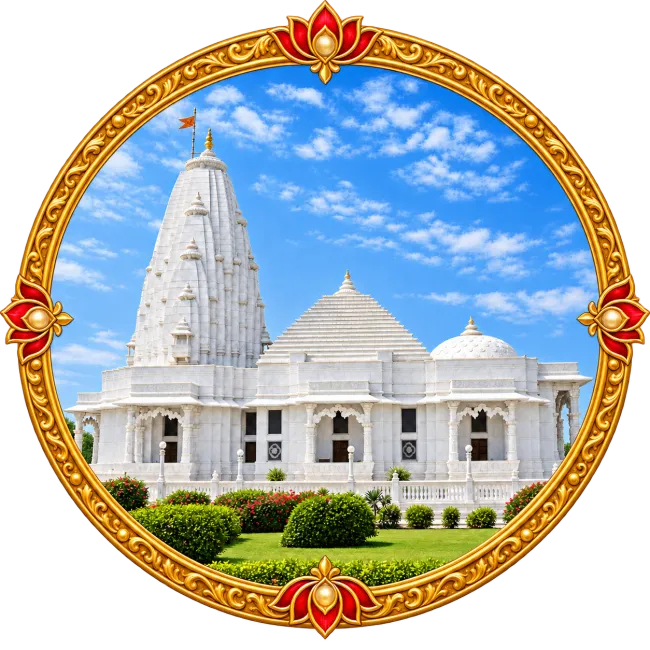
Birla Mandir (Lakshmi Narayan Temple), Jaipur
Birla Mandir, officially known as the Lakshmi Narayan Temple, is one of the most beautiful and peaceful temples in Jaipur, Rajasthan. Built entirely from white marble, the temple is dedicated to Lord Vishnu in his Narayan form and Goddess Lakshmi, the deity of wealth, prosperity, and good fortune.
Situated at the foot of Moti Dungri Hill, the temple is admired for its magnificent architecture, detailed marble carvings, peaceful gardens, and illuminated appearance after sunset. Its spiritual atmosphere and convenient location make it popular among devotees as well as tourists visiting Jaipur.
About Birla Mandir Jaipur
Birla Mandir is a modern Hindu temple located on Jawahar Lal Nehru Marg in the Tilak Nagar area of Jaipur. The main sanctum houses beautiful idols of Lord Narayan and Goddess Lakshmi. Devotees worship the divine couple for prosperity, happiness, peace, and harmony in family life.
The temple stands on an elevated platform that offers an impressive view of its white marble structure. The peaceful surroundings, spacious prayer hall, gardens, and devotional atmosphere make it an ideal place for worship and meditation.
The temple welcomes people from every community. Its architectural design and carvings communicate the values of spiritual unity, tolerance, and respect for different philosophical traditions.
History of Birla Mandir Jaipur
Birla Mandir was commissioned and constructed by the Birla family, one of India’s prominent industrial families known for building temples, educational institutions, and charitable establishments across the country.
Construction of the temple began in 1977, and the completed temple was opened in 1988. It was built with the support of the B.M. Birla Foundation.
According to a widely accepted local tradition, the land for the temple was provided to the Birla family by the former royal family of Jaipur for a symbolic payment of one rupee. The temple was subsequently constructed as a centre of devotion dedicated to Goddess Lakshmi and Lord Narayan.
Unlike Jaipur’s medieval temples and palaces, Birla Mandir represents modern Indian temple architecture. Despite being a comparatively recent shrine, it has become one of the city’s most recognised religious landmarks.
Who Built Birla Mandir and When?
Birla Mandir Jaipur was built by the Birla family through the B.M. Birla Foundation. The temple was completed and formally opened in 1988.
Religious Significance of Birla Mandir
The temple is dedicated to Lord Narayan, a form of Lord Vishnu, and Goddess Lakshmi. In Hindu tradition, Lord Vishnu is regarded as the preserver of the universe, while Goddess Lakshmi represents prosperity, abundance, fortune, and spiritual well-being.
Devotees visit the temple to pray for:
- Financial stability and prosperity
- Peace and happiness in the family
- Success in business and professional life
- Protection from difficulties
- Good health and spiritual strength
- Harmony between married couples
- Wisdom and righteous conduct
The combined worship of Lakshmi and Narayan symbolises the balance between material prosperity and spiritual responsibility. The temple teaches that wealth should be accompanied by wisdom, compassion, and devotion.
Architecture of Birla Mandir Jaipur
Birla Mandir is constructed almost entirely from gleaming white marble. Its bright exterior creates a striking contrast with Jaipur’s traditional pink buildings and the rocky landscape of Moti Dungri Hill.
The temple combines traditional Hindu architectural elements with a clean and modern design. Its elevated position, tall domes, carved pillars, decorated walls, and spacious halls make it one of the finest modern temples in Jaipur.
Three Prominent Domes
One of the most recognisable features of Birla Mandir is its three large domes. These domes are commonly interpreted as symbols of spiritual unity and respect for different religious traditions.
The domes give the temple an impressive appearance and make the structure visible from different parts of the surrounding area.
Marble Carvings
The walls and pillars contain carvings based on Hindu mythology, sacred symbols, floral patterns, and scenes connected with Indian religious traditions. Verses and teachings associated with Hindu scriptures can also be seen within the temple complex.
Stained-Glass Windows
Colourful stained-glass windows depict scenes and figures from Hindu mythology. When sunlight passes through these windows, it creates a beautiful visual effect inside the prayer hall.
Statues of Spiritual Personalities
The exterior includes representations of saints, philosophers, and spiritual personalities from different traditions. These figures express the temple’s broader message of universal wisdom, peaceful coexistence, and respect for humanity.
Main Sanctum
The central attraction is the sanctum containing the idols of Goddess Lakshmi and Lord Narayan. The idols are beautifully decorated with garments, flowers, ornaments, and garlands. Devotees gather before the sanctum for darshan, prayer, and aarti.
Gardens and Night Illumination
The temple is surrounded by well-maintained gardens that enhance its peaceful atmosphere. In the evening, decorative lighting illuminates the marble building. The glowing temple against the dark sky is one of Jaipur’s most beautiful nighttime sights.
Birla Mandir Jaipur Timings
The commonly followed darshan schedule is:
The schedule can be revised on Janmashtami, Diwali, Ekadashi, and other major festivals. Visitors planning specifically to attend an aarti should confirm the day’s programme at the temple entrance.
Best Time for Darshan
For peaceful darshan, visit between 8:00 AM and 10:00 AM. The temple is generally calmer during the morning, and the marble complex has a serene atmosphere.
For architecture, photography of the permitted exterior areas, and evening illumination, the best visiting time is between 6:00 PM and 8:00 PM. Visitors arriving before the evening aarti can experience both sunset and the illuminated temple.
October to March is the most comfortable season because Jaipur experiences pleasant weather during these months. During summer, an evening visit is preferable because the daytime heat can make walking on the temple premises uncomfortable.
Daily Puja and Aarti
Daily worship at Birla Mandir includes prayers, the offering of flowers, presentation of bhog, chanting of mantras, and aarti before the idols of Lakshmi and Narayan.
During aarti, lamps are offered to the deities while devotees sing devotional hymns. The sound of bells, prayers, and sacred chants creates a deeply spiritual atmosphere inside the main hall.
The evening aarti is particularly popular because the marble temple is illuminated at the same time. Devotees are advised to enter the prayer hall before the ceremony begins, especially on weekends and festival days.
Major Festivals Celebrated
Janmashtami
Janmashtami, celebrating the birth of Lord Krishna, is one of the most important festivals observed at the temple. The idols and prayer hall are decorated with flowers and lights, and a large number of devotees attend the celebrations.
Diwali
The temple is beautifully illuminated during Diwali. Special worship is offered to Goddess Lakshmi, and devotees pray for prosperity, happiness, and good fortune.
Lakshmi Puja
Special prayers dedicated to Goddess Lakshmi are performed on auspicious occasions. Devotees offer flowers, sweets, and devotional prayers for abundance and household well-being.
Ram Navami
Ram Navami commemorates the birth of Lord Rama, an incarnation of Lord Vishnu. Devotional singing and special worship are organised at the temple.
Holi
Holi is celebrated with devotion and festive decorations. The celebrations highlight the joyful traditions associated with Lord Vishnu and his incarnations.
Vaikuntha Ekadashi
Vaikuntha Ekadashi is an important occasion for devotees of Lord Vishnu. Many worshippers observe fasting, offer prayers, and visit the temple for special darshan.
Offerings and Prasad
Devotees may offer:
- Fresh flowers and garlands
- Tulsi leaves
- Fruits
- Sweets
- Coconut
- Incense
- Donations for temple activities
Tulsi leaves hold special importance in the worship of Lord Vishnu. Flowers, fruits, and sweets are also commonly presented before Lakshmi Narayan.
Visitors should use authorised counters or designated areas for offerings. Prasad is distributed according to the temple’s daily arrangements and festival schedule.
Entry Fee and Visit Duration
There is no entry fee for visiting Birla Mandir.
Visitors who wish to attend aarti, explore the gardens, and observe the evening illumination should allow at least one hour.
How to Reach Birla Mandir Jaipur
Birla Mandir is located on Jawahar Lal Nehru Marg in Tilak Nagar, at the base of Moti Dungri Hill. Auto-rickshaws, taxis, city buses, and app-based cabs are available throughout Jaipur.
By Air
Jaipur International Airport is approximately 9 kilometres from the temple. A taxi or app-based cab can be hired from the airport. Travel time depends on traffic conditions.
By Train
Jaipur Junction is approximately 5–6 kilometres from Birla Mandir. Visitors can take an auto-rickshaw, taxi, or local bus from the railway station.
Gandhinagar Jaipur Railway Station is closer and is approximately 3 kilometres from the temple.
By Bus
Sindhi Camp Bus Stand is approximately 5 kilometres away. Rajasthan Roadways and private buses connect Jaipur with Delhi, Agra, Ajmer, Kota, Udaipur, Jodhpur, and other cities.
By Local Transport
Auto-rickshaws, e-rickshaws, taxis, city buses, and app-based cabs provide convenient access. Visitors may use “Birla Mandir” or “Lakshmi Narayan Temple near Moti Dungri” as the destination.
Nearby Places to Visit
Moti Dungri Ganesh Temple
Located next to Birla Mandir, Moti Dungri Ganesh Temple is one of Jaipur’s most revered temples dedicated to Lord Ganesha. Both temples can easily be visited during the same trip.
Albert Hall Museum
Albert Hall Museum is known for its Indo-Saracenic architecture and extensive collection of paintings, sculptures, coins, carpets, and historical objects.
Central Park
Central Park is one of Jaipur’s largest green spaces. It is suitable for walking, relaxation, and spending time away from busy city streets.
Amar Jawan Jyoti
This memorial honours soldiers who sacrificed their lives in service to the nation. It is located near the Rajasthan Legislative Assembly.
Rambagh Palace
The historic Rambagh Palace reflects Jaipur’s royal heritage and magnificent architecture. It is located within a short driving distance of the temple.
Hawa Mahal
Hawa Mahal, one of Jaipur’s best-known monuments, is approximately 5 kilometres from Birla Mandir.
Visitor Guidelines
- Wear clean and modest clothing.
- Remove footwear at the designated place.
- Maintain silence inside the prayer hall.
- Do not touch the idols or sacred decorations.
- Follow photography restrictions displayed by temple management.
- Avoid carrying food inside the main worship area.
- Use authorised counters for donations and offerings.
- Keep the temple and gardens clean.
- Supervise children inside crowded areas.
- Arrive before aarti on weekends and festivals.
- Senior citizens should avoid peak festival crowds if they prefer a peaceful visit.
- Check the displayed schedule because festival timings may differ from regular timings.
Conclusion
Birla Mandir, also known as Lakshmi Narayan Temple, is a remarkable combination of devotion, modern architecture, and spiritual harmony. Constructed by the Birla family and completed in 1988, the temple has become one of Jaipur’s most prominent religious landmarks.
Its white marble structure, beautifully decorated sanctum, carved walls, stained-glass windows, gardens, and evening illumination attract worshippers and travellers throughout the year. Whether visiting for the blessings of Lakshmi Narayan, attending the evening aarti, or admiring the architecture, Birla Mandir offers a peaceful and memorable experience in the heart of Jaipur.