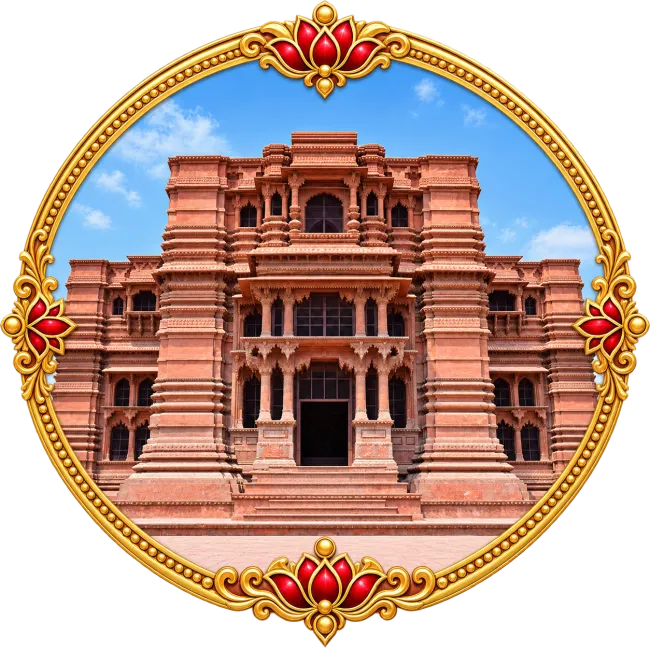
Govind Dev Ji Temple Jaipur
Visit Govind Dev Ji Temple in Jaipur, one of the most revered Krishna temples in Rajasthan and the spiritual heart of the Pink City. Situated in the Jai Niwas Garden within the City Palace complex, the temple is dedicated to Shri Radha Govind Dev Ji. The deity is considered the presiding lord and true ruler of Jaipur, while the former royal family traditionally regarded itself as serving under his divine authority.
Built in 1735 by Maharaja Sawai Jai Singh II, the temple is famous for its historic deity brought from Vrindavan, seven daily jhankis, soulful aartis, royal-style shringar and magnificent celebrations of Janmashtami, Holi and Radhashtami. Thousands of devotees visit every day to receive darshan and experience the temple’s deeply devotional atmosphere.
About Govind Dev Ji Temple Jaipur
Govind Dev Ji Temple is a prominent Radha-Krishna shrine located between Chandra Mahal and Badal Mahal in Jaipur’s City Palace complex. The temple stands within the beautiful Jai Niwas Garden and is easily accessible from Jaleb Chowk.
The principal deity is Lord Krishna in his Govind Dev Ji form, worshipped alongside Shri Radha Rani. The temple is closely associated with the Gaudiya Vaishnava tradition and follows an elaborate daily seva system in which the deities are treated as living members of the royal household.
Govind Dev Ji is regarded as the Aradhya Deva, or principal worshipped deity, of Jaipur. The rulers of Jaipur considered the Lord the actual king of the city. Maharaja Sawai Jai Singh II viewed himself as a servant and representative of Govind Dev Ji.
Unlike temples that remain continuously open, Govind Dev Ji Temple presents seven scheduled jhankis every day. During each jhanki, devotees receive darshan of a different stage in the Lord’s daily routine, from waking in the morning to resting at night.
History of Govind Dev Ji Temple
The history of Govind Dev Ji Temple begins in Vrindavan. According to Vaishnava tradition, the sacred image of Govind Dev Ji represents the divine appearance of Lord Krishna.
Religious tradition associates the form of Govind Dev Ji with Vajranabha, the great-grandson of Lord Krishna. It is believed that Vajranabha commissioned sacred images based on descriptions of Krishna given by family members who had seen him.
Over time, the deity was lost and later rediscovered in Vrindavan by Shri Rupa Goswami, one of the principal disciples of Chaitanya Mahaprabhu. A magnificent temple was constructed for Govind Dev Ji in Vrindavan during the reign of Mughal emperor Akbar. That temple was patronised by Raja Man Singh I of Amber and completed during the 16th century.
During the reign of Aurangzeb, several temples in the Mathura and Vrindavan region faced the threat of destruction. To protect the sacred deity, the custodians moved Govind Dev Ji from Vrindavan.
The deity was taken through different safe locations before reaching the kingdom of Amber. Maharaja Sawai Jai Singh II later brought Govind Dev Ji to his newly established capital of Jaipur.
Who Built Govind Dev Ji Temple?
Govind Dev Ji Temple in Jaipur was built in 1735 by Maharaja Sawai Jai Singh II, the founder of Jaipur.
The Maharaja installed the deity within the royal complex so that he could receive darshan from Chandra Mahal. The location reflected the belief that Govind Dev Ji was the true ruler of Jaipur and the royal family served under his authority.
The present temple has undergone renovations and additions over the years, but its association with Sawai Jai Singh II and the Jaipur royal family remains central to its identity.
Religious Significance of Govind Dev Ji Temple
Govind Dev Ji Temple is one of the most important Krishna temples in northern India. Devotees believe that the sacred form of Govind Dev Ji closely resembles the actual appearance of Lord Krishna.
The temple represents the loving relationship between Radha and Krishna and emphasises devotion through seva, music, shringar, food offerings and darshan.
Devotees visit the temple to pray for:
- Love and harmony within the family
- Happiness in married life
- Spiritual devotion and inner peace
- Protection from difficulties
- Success in education and employment
- Prosperity in business
- Health and well-being of children
- Freedom from fear and anxiety
- Fulfilment of sincere wishes
The intense devotional connection between Govind Dev Ji and the residents of Jaipur is visible during every aarti. Large groups of devotees sing, clap and chant “Radhe Govind” as the curtains of the sanctum open.
Architecture of Govind Dev Ji Temple
Govind Dev Ji Temple combines Rajput, Mughal and traditional Vaishnava architectural influences. Unlike many major Hindu temples, the main shrine does not have a tall and elaborate shikhara. Its comparatively simple external design complements the royal buildings surrounding it.
The sanctum is positioned so that the deity could once be viewed directly from the royal residence at Chandra Mahal. The spacious courtyard allows large numbers of devotees to gather during daily jhankis and festivals.
Important architectural features include:
- A spacious central prayer courtyard
- Decorated arches and pillars
- Marble and sandstone elements
- Traditional Rajasthani detailing
- A raised sanctum containing Radha Govind Dev Ji
- Large silver and ornamental doors
- Royal-style decorations and chandeliers
- Jai Niwas Garden surrounding the temple
- A large satsang hall for religious gatherings
The temple’s newer satsang hall is known for its vast pillar-free interior. The spacious design allows thousands of devotees to participate in bhajans, discourses and religious programmes without their view being blocked by supporting columns.
Seven Daily Jhankis at Govind Dev Ji Temple
The daily worship follows seven principal jhankis. The sanctum curtains close between these darshan periods so that the scheduled seva, dressing, food offerings and rest of the deities can be completed.
Mangla Jhanki
Mangla is the first darshan of the day. Govind Dev Ji is gently awakened with devotional chants, bells and prayers. This is considered one of the most auspicious jhankis.
Dhoop Jhanki
During Dhoop Jhanki, incense is offered to the deities. The morning worship and food offering are performed, and devotees receive darshan after the Lord’s morning preparations.
Shringar Jhanki
The deities appear in beautiful clothes, jewellery, flowers and seasonal ornaments during Shringar Jhanki. This is one of the most visually attractive darshans.
Rajbhog Jhanki
A complete royal meal is offered to Govind Dev Ji during Rajbhog. The offerings may include sweets, grains, vegetables, fruits and other sattvic preparations.
Gwal Jhanki
Gwal Jhanki represents Krishna’s return from grazing cows. The ritual reflects the Lord’s childhood pastimes in Vrindavan.
Sandhya Jhanki
Sandhya Jhanki is the principal evening worship. Lamps, incense and devotional music fill the temple while devotees sing and participate in the aarti.
Shayan Jhanki
Shayan is the final darshan of the day. The deity is prepared for rest, and the day’s worship concludes with gentle devotional prayers.
Govind Dev Ji Temple Timings
The temple’s schedule changes periodically according to season and the Vaishnava calendar. The following timetable is the regular schedule followed during the main part of the year:
The sanctum remains closed between the seven jhankis for the Lord’s seva, bhog, shringar and rest. Visitors should therefore plan their arrival according to a particular jhanki instead of treating the temple as continuously open.
Festival schedules and seasonal changes may alter these times.
Morning and Evening Puja and Aarti Timings
Best Time for Darshan
Mangla Aarti between 5:00 AM and 5:15 AM is considered the most auspicious darshan. It is suitable for devotees who want to begin the day with peaceful prayer.
Shringar Jhanki between 9:30 AM and 10:15 AM is the best time to see Radha Govind Dev Ji dressed in elaborate clothes, jewellery, flowers and seasonal ornaments.
Sandhya Aarti between 5:45 PM and 6:45 PM offers the most energetic devotional experience. Large numbers of devotees sing bhajans and participate in the worship.
Visitors seeking smaller crowds should choose a normal weekday and avoid Janmashtami, Holi, Radhashtami, Ekadashi and public holidays.
Daily Puja and Seva
The temple follows an elaborate Vaishnava seva system in which the deities are served throughout the day.
The main daily rituals include:
- Awakening the deities during Mangla
- Bathing and purification rituals
- Dressing and floral decoration
- Offering incense and lamps
- Seven scheduled jhankis
- Multiple food offerings
- Bhajan and kirtan
- Seasonal shringar
- Evening aarti
- Preparation of the deities for rest
The clothes, ornaments, flowers and food offerings change according to the season, festival and Vaishnava calendar. In summer, light clothing and cooling floral decorations are used, while warm garments are offered during winter.
Major Festivals Celebrated
Janmashtami
Janmashtami is the grandest festival at Govind Dev Ji Temple. Thousands of devotees gather to celebrate the birth of Lord Krishna. The temple is decorated with flowers, lights and colourful fabrics.
Special jhankis, abhishek, bhajans and midnight celebrations are organised. Entry and queue arrangements are modified to manage the enormous gathering.
Nandotsav
Nandotsav is celebrated on the day following Janmashtami. It commemorates the joyful celebrations held by Nanda Baba after Krishna’s birth. Devotional singing and special offerings are organised.
Holi
Holi at Govind Dev Ji Temple is famous for its devotional colours, flower petals, songs and traditional celebrations. The festivities begin before the principal day of Holi and attract visitors from across India.
Radhashtami
Radhashtami celebrates the appearance of Shri Radha Rani. The deity receives special shringar, and devotees offer flowers, clothes and prayers.
Gopashtami
Gopashtami celebrates Krishna’s role as a cowherd. Special decorations and rituals represent his childhood pastimes in Vrindavan.
Sharad Purnima
On Sharad Purnima, Radha and Krishna are worshipped in a special moonlight-inspired setting. White clothes, flowers and decorations are commonly used.
Annakut and Govardhan Puja
A large variety of vegetarian preparations is offered to Govind Dev Ji during Annakut. The festival commemorates Krishna lifting Govardhan Hill to protect the residents of Braj.
Jhulan Yatra
During the monsoon season, Radha and Krishna are seated on a beautifully decorated swing. Flowers, greenery and devotional songs create a joyful atmosphere.
Offerings and Prasad
Devotees may offer:
- Fresh flowers and garlands
- Tulsi leaves
- Fruits
- Sweets
- Makhan and mishri
- Dry fruits
- Clothes for the deities
- Decorative ornaments
- Sattvic food items
- Donations for temple seva
Tulsi has special importance in Krishna worship. Offerings should be submitted at authorised temple counters or handed to designated priests.
Prasad may include laddoo, peda, mishri, makhan, fruits or items from the Lord’s bhog. Devotees should accept it respectfully and avoid wasting food.
Entry Fee and Visit Duration
There is no general entry fee for darshan at Govind Dev Ji Temple.
A regular visit requires 30 to 60 minutes. Since the temple opens only during scheduled jhankis, visitors arriving after a darshan has ended may have to wait for the next one.
Those attending Sandhya Aarti, a festival celebration or a special religious programme should keep one to two hours for the visit.
Dress Code and Visitor Guidelines
- Wear clean and modest clothing.
- Remove footwear at the designated counter.
- Arrive before the scheduled jhanki begins.
- Follow separate queues and security instructions.
- Maintain silence near the sanctum.
- Do not touch the deities or altar.
- Photography may be restricted near the main sanctum.
- Avoid carrying leather items into the worship area.
- Keep mobile phones on silent mode.
- Do not bring outside food into restricted areas.
- Use authorised counters for donations and offerings.
- Take care of children and elderly family members during crowded festivals.
- Keep the temple and garden area clean.
How to Reach Govind Dev Ji Temple
By Train
Jaipur Junction is the nearest major railway station, located approximately 5 kilometres from the temple. Taxis, auto-rickshaws and app-based cabs are available from the station.
By Metro
Badi Chaupar is the nearest convenient Jaipur Metro station. From Badi Chaupar, visitors can take an e-rickshaw or walk towards Jaleb Chowk and the City Palace area.
By Bus
Sindhi Camp Bus Stand is approximately 4 to 5 kilometres from the temple. Local buses, auto-rickshaws, e-rickshaws and taxis are available.
By Air
Jaipur International Airport is approximately 13 to 15 kilometres from the temple. A taxi or app-based cab is the most convenient option from the airport.
By Road
The temple can be approached through the walled city towards Jaleb Chowk and the City Palace complex. Parking inside the historic area may be limited, so using public transport or an e-rickshaw is convenient.
Nearby Places to Visit
City Palace
City Palace is located beside the temple and showcases Jaipur’s royal architecture, courtyards, museums and historical collections.
Jantar Mantar
Jantar Mantar is a UNESCO World Heritage Site containing astronomical instruments built under Maharaja Sawai Jai Singh II.
Hawa Mahal
Hawa Mahal is one of Jaipur’s most recognisable landmarks and is located close to the temple.
Tripolia Bazaar
Tripolia Bazaar is known for traditional jewellery, lac bangles, textiles and handicrafts.
Garh Ganesh Temple
Garh Ganesh Temple is an ancient shrine dedicated to Lord Ganesha and is situated on a hill overlooking Jaipur.
Gaitore Ki Chhatriyan
Gaitore contains the beautifully carved royal cenotaphs of Jaipur’s former rulers.
Conclusion
Govind Dev Ji Temple is not merely a place of worship but the spiritual centre of Jaipur. Built in 1735 by Maharaja Sawai Jai Singh II, the temple preserves the sacred deity brought from Vrindavan and the royal tradition of treating Govind Dev Ji as the true ruler of the city.
Its seven daily jhankis, elaborate shringar, devotional aartis, historic architecture and grand celebrations make it one of Jaipur’s most important religious destinations. Whether attending Mangla Aarti, viewing the magnificent Shringar Jhanki or participating in Sandhya Aarti, devotees experience a powerful atmosphere of Radha-Krishna devotion at Govind Dev Ji Temple.