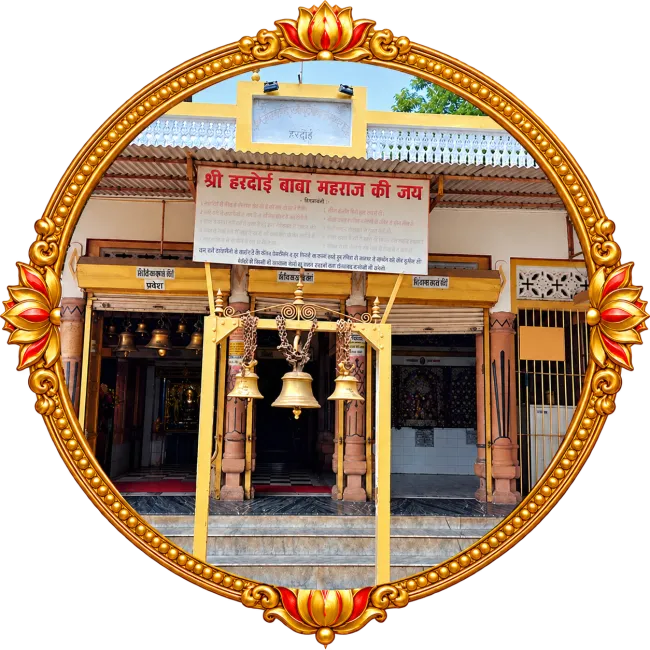
Hardoi Baba Temple
Hardoi Baba Temple, also known as Budhe Baba Temple, is one of the oldest and most revered religious places in Hardoi, Uttar Pradesh. Located near Prahlad Ghat, the temple is believed to represent the spiritual identity and traditional faith of the city. The sacred Peepal tree situated within the complex is worshipped as “Hardoi Baba ka Darbar,” and numerous idols of Hindu deities are installed throughout the temple.
The religious site is believed to be nearly 400 years old, while the present temple structure was developed in 1949. Devotees visit Hardoi Baba Temple to pray for protection, family happiness, good health, prosperity, and success in important undertakings. The temple is particularly crowded during weddings, mundan ceremonies, Ram Navami, and the annual Chaitra fair.
About Hardoi Baba Temple
Hardoi Baba Temple is a historic shrine situated close to Prahlad Ghat in Hardoi city. The temple is popularly called Budhe Baba Temple and is deeply connected with the social and religious traditions of local residents.
The temple is not centred on only one deity. It is a large religious complex containing idols and shrines dedicated to several Hindu gods and goddesses. However, its most distinctive feature is the ancient Peepal tree located within the premises. This sacred tree and its surrounding worship area are collectively known as Hardoi Baba ka Darbar.
Devotees believe that Hardoi Baba protects the city and blesses people who approach the darbar with sincere faith. Many local families begin important religious and family ceremonies only after seeking blessings at the temple.
Weddings, engagements, mundan ceremonies, new business ventures, and other auspicious activities are often connected with a visit to Hardoi Baba Temple. Newly married couples also come to the shrine to seek blessings for a happy and stable married life.
History of Hardoi Baba Temple
The sacred place associated with Hardoi Baba is believed to be nearly 400 years old. The original centre of worship was the ancient Peepal tree, which gradually became respected as the divine court of Hardoi Baba.
Local residents began gathering beneath the tree for prayer, devotional singing, and religious ceremonies. As faith in the sacred place increased, idols of different Hindu gods and goddesses were installed around it.
The present temple structure was constructed or extensively developed in 1949. The identity of one specific original founder is not preserved in available historical information, but the temple’s development is associated with the collective devotion of local residents and religious caretakers.
Over time, the temple expanded into an important religious complex. A separate structure known as the Kirtan Bhavan was constructed in front of the main worship area to accommodate devotional singing, religious discourses, Ramleela, and other spiritual programmes.
The walls of the Kirtan Bhavan are decorated with paintings depicting important events from the lives of Lord Rama, Lord Krishna, King Harishchandra, and Shravan Kumar. These paintings give the building both religious and educational importance.
Religious Significance of Hardoi Baba Temple
Hardoi Baba Temple is considered a guardian shrine of Hardoi city. Local devotees believe that receiving the blessings of Baba before beginning an auspicious activity helps remove obstacles and ensures success.
People commonly visit the temple to pray for:
- Peace and happiness in the family
- Protection from difficulties and misfortune
- Health and long life
- Marriage and marital harmony
- Children and their well-being
- Success in education and employment
- Growth in business
- Completion of important work
- Relief from fear and negative influences
- Fulfilment of personal wishes
The temple holds special importance in local marriage traditions. Many families visit the shrine before or after a wedding ceremony. Wedding invitations may also be offered before Hardoi Baba as a symbolic request for divine presence and blessings.
Parents bring children to the temple during mundan and other family ceremonies. Devotees may offer sweets, flowers, clothes, bells, or organise a religious programme after their wish is fulfilled.
Sacred Peepal Tree
The ancient Peepal tree is the spiritual heart of Hardoi Baba Temple. The worship area surrounding the tree is popularly called Hardoi Baba ka Darbar.
In Hindu tradition, the Peepal tree is treated as sacred and associated with the presence of several deities. Devotees offer water to the tree, light lamps at the designated place, perform circumambulation, and pray for the well-being of their families.
Some worshippers tie sacred threads near the tree while making a vow. They may return after the fulfilment of their wish to offer prayers and express gratitude.
Visitors should avoid using nails, metal objects, synthetic materials, or anything that could damage the ancient tree. Lamps and incense should be placed only in the spaces provided by the temple management.
Architecture of Hardoi Baba Temple
Hardoi Baba Temple represents the architectural character of a traditional urban Hindu shrine. The complex has developed gradually as additional shrines and facilities were added over time.
The important sections of the complex include:
- Hardoi Baba ka Darbar
- The ancient sacred Peepal tree
- Shrines of different gods and goddesses
- Main prayer and worship areas
- Kirtan Bhavan
- Space for Ramleela and religious programmes
- Areas for lighting lamps and making offerings
- Open space for fairs and community gatherings
The Kirtan Bhavan is one of the most notable structures in the complex. Its walls contain paintings based on the lives and teachings of Lord Rama, Lord Krishna, King Harishchandra, and Shravan Kumar.
These paintings communicate important values such as truth, devotion, obedience, sacrifice, service to parents, and commitment to dharma.
Hardoi Baba Temple Timings
The regular darshan and worship schedule is:
During Ram Navami, Chaitra Mela, special Ramleela performances, and other religious celebrations, the temple may remain open beyond the regular hours.
Best Time for Darshan
The best time for peaceful darshan is between 5:00 AM and 8:00 AM. Visitors can participate in the morning puja and aarti while avoiding the larger daytime crowds.
Evening between 6:00 PM and 8:00 PM is also suitable. The lighting of lamps, devotional songs, and evening aarti create a peaceful spiritual atmosphere.
March and April are important months because the Ram Navami fair is organised during the Chaitra period. Visitors interested in religious celebrations and local culture can plan their visit during this festival.
October to March is the most comfortable season for exploring the temple and nearby attractions because of the pleasant weather.
Daily Puja and Rituals
Daily worship begins with the cleaning and purification of the temple. The shrines are decorated with flowers, clothes, ornaments, and sacred substances before the morning prayers.
The regular rituals include:
- Cleaning and purification of the temple
- Offering water to the sacred Peepal tree
- Lighting of lamps and incense
- Offering flowers, fruits, and sweets
- Morning puja and aarti
- Recitation of Hindu prayers
- Devotional singing in Kirtan Bhavan
- Evening puja and aarti
- Distribution of prasadam
Devotees may also organise Ramcharitmanas recitation, Sundarkand Path, bhajan-kirtan, havan, and other religious programmes with prior permission from the temple management.
Ram Navami Fair
The annual Ram Navami fair is the most important religious celebration at Hardoi Baba Temple. It is organised during the Chaitra month and traditionally extends across Navami, Dashami, and Ekadashi.
The temple is decorated with lights, flowers, religious flags, and colourful fabrics. Devotees gather in large numbers to offer prayers and participate in the festivities.
The fair generally includes:
- Special puja and aarti
- Ramleela performances
- Bhajan and kirtan
- Religious discourses
- Prasadam distribution
- Temporary shops and stalls
- Children’s attractions
- Community religious programmes
The Ramleela presents important events from the life of Lord Rama and communicates the values of truth, duty, courage, devotion, and righteousness.
Other Festivals Celebrated
Maha Shivratri
Devotees worship Lord Shiva and offer water, milk, bel leaves, and flowers. Special prayers may be organised within the temple complex.
Hanuman Jayanti
Hanuman Jayanti is celebrated with the recitation of Hanuman Chalisa, Sundarkand Path, special aarti, and prasadam distribution.
Janmashtami
The birth of Lord Krishna is celebrated with devotional singing, decorations, and prayers. The paintings of Lord Krishna inside Kirtan Bhavan add to the significance of the occasion.
Navratri
Devotees worship the different forms of the Divine Mother during Chaitra and Sharadiya Navratri. Special puja and devotional programmes are performed.
Diwali
The temple is decorated with lamps and lights during Diwali. Devotees pray for prosperity, peace, and protection from difficulties.
Kartik Purnima
Devotees visit the temple and nearby Prahlad Ghat on Kartik Purnima. Lighting lamps and performing charitable activities are considered auspicious.
Offerings at Hardoi Baba Temple
Devotees may offer the following items:
- Fresh flowers and garlands
- Fruits
- Sweets
- Coconut
- Incense sticks
- Ghee or oil lamps
- Sacred thread
- Red or yellow cloth
- Wedding invitation cards
- Bells
- Prasadam
People visiting before a wedding or family ceremony may offer an invitation card and pray for the successful completion of the event.
Devotees should avoid applying excessive oil, vermilion, or other substances directly to the sacred Peepal tree. All offerings should be made at the designated worship place.
Kirtan Bhavan
Kirtan Bhavan is located in front of the principal temple area and serves as an important venue for religious and cultural activities.
Bhajan, kirtan, Ramcharitmanas recitation, religious discourses, and community programmes are organised in the building. During Ram Navami, it becomes one of the main centres of festival activity.
Its walls are decorated with paintings related to:
- Lord Rama
- Lord Krishna
- King Harishchandra
- Shravan Kumar
The paintings are intended to inspire devotees and teach younger visitors about devotion, truthfulness, sacrifice, respect for parents, and righteous conduct.
Entry Fee and Visit Duration
There is no general entry fee for visiting Hardoi Baba Temple.
A regular darshan generally requires 30 to 60 minutes. Visitors who want to attend an aarti, explore the Kirtan Bhavan, or participate in a special puja should keep one to two hours for their visit.
During the Ram Navami fair and other major celebrations, darshan may take longer because of large crowds.
How to Reach Hardoi Baba Temple
By Train
Hardoi Railway Station is the nearest railway station. It lies on an important railway route and has connections with Lucknow, Delhi, Bareilly, Shahjahanpur, Moradabad, and several other cities.
Auto-rickshaws, e-rickshaws, and taxis are available outside the station. Visitors can ask for Baba Mandir, Budhe Baba Mandir, or the temple near Prahlad Ghat.
By Road
Hardoi is well connected by road with Lucknow, Sitapur, Shahjahanpur, Kannauj, Farrukhabad, Lakhimpur Kheri, and nearby towns.
Government and private buses operate to Hardoi Bus Stand. From the bus stand, visitors can hire an auto-rickshaw, e-rickshaw, or taxi to reach the temple.
By Air
Chaudhary Charan Singh International Airport in Lucknow is the nearest major airport. Hardoi can be reached from Lucknow by train, bus, or taxi.
The road journey from Lucknow to Hardoi generally takes between two and three hours, depending on traffic and the chosen route.
Nearby Religious and Tourist Places
Prahlad Ghat
Prahlad Ghat is located close to Hardoi Baba Temple and is associated with local religious traditions. Devotees may combine a visit to the ghat with temple darshan.
Prahlad Kund
Prahlad Kund is connected with the traditional story of Bhakta Prahlad and the ancient religious identity of Hardoi.
Shravan Devi Temple
Shravan Devi Temple is an important Shakti shrine in Hardoi and attracts large numbers of devotees during Navratri.
Sakaha Temple
Sakaha Temple is a respected religious site dedicated to Lord Shiva and is visited particularly during Maha Shivratri and the month of Sawan.
Sandi Bird Sanctuary
Sandi Bird Sanctuary is a popular natural attraction near Hardoi. It is especially worth visiting during winter when migratory birds arrive in the region.
Visitor Guidelines
- Wear clean and modest clothing.
- Remove footwear before entering the worship area.
- Maintain silence near Hardoi Baba ka Darbar.
- Do not damage the sacred Peepal tree.
- Light lamps only at designated places.
- Follow the queue system during fairs and festivals.
- Obtain permission before organising a special ceremony.
- Photography may be restricted in certain worship areas.
- Keep the temple and Kirtan Bhavan clean.
- Do not leave plastic or food waste near the sacred tree.
- Take care of children and elderly visitors during crowded events.
- Keep personal belongings secure during the Ram Navami fair.
- Follow the instructions of temple priests and management.
Conclusion
Hardoi Baba Temple, also known as Budhe Baba Temple, is an important symbol of Hardoi’s religious and cultural heritage. The sacred place is believed to be nearly 400 years old, while the present temple structure dates to 1949. Its ancient Peepal tree, multiple shrines, Kirtan Bhavan, religious paintings, and Ram Navami fair make it a distinctive pilgrimage destination.
The temple remains closely connected with the everyday lives of local families. From weddings and mundan ceremonies to festivals and personal prayers, devotees seek the blessings of Hardoi Baba before beginning important activities. A visit to the temple offers an opportunity to experience the faith, traditional values, and living spiritual heritage of Hardoi.