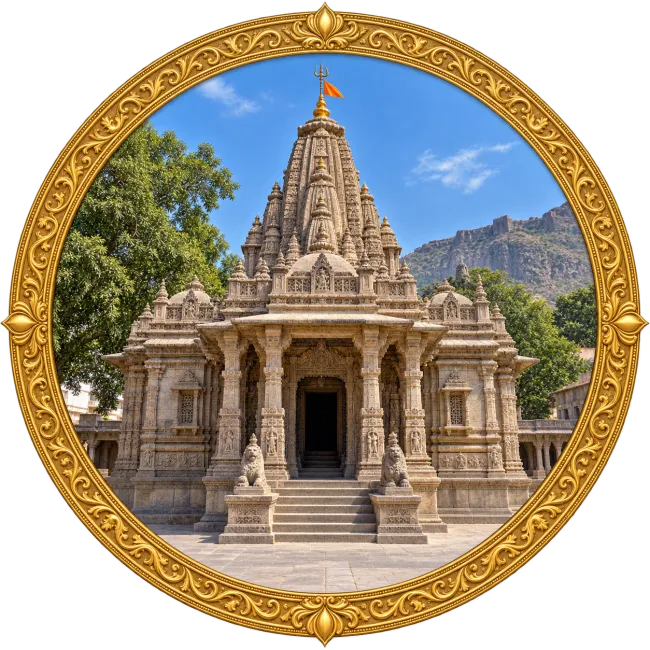
Hatkeshwar Mahadev Temple, Junagadh
Visit Hatkeshwar Mahadev Temple in Junagadh, a sacred shrine dedicated to Lord Shiva and an important centre of devotion for the local Nagar Brahmin community. Located in Shreenath Nagar near Jawahar Road, the temple offers a peaceful atmosphere for prayer, Shiva worship, meditation and participation in traditional religious ceremonies.
About Hatkeshwar Mahadev Temple, Junagadh
Hatkeshwar Mahadev Temple is situated on Hatkeshwar Lane, near Sejni Taki, Shreenath Nagar, Junagadh, Gujarat. The temple is dedicated to Lord Shiva in his Hatkeshwar form and is especially revered by members of the Nagar Brahmin community, who worship Hatkeshwar Mahadev as their Kuldevata.
The temple’s public historical information does not identify a specific construction year or individual founder. The shrine developed as a local centre of Shiva worship and has been maintained by devotees and community organisations over generations.
Regular puja, abhishek and aarti are performed before the sacred Shivling. The temple becomes especially active during Maha Shivaratri, Shravan month, Pradosh Vrat, Somvati Amavasya and Hatkeshwar Jayanti.
History of Hatkeshwar Mahadev Temple
Hatkeshwar Mahadev has traditionally been worshipped as the presiding deity of the Nagar Brahmin community. As Nagar families settled in different parts of Gujarat, they established shrines dedicated to Hatkeshwar Mahadev in their respective towns and cities.
The Junagadh temple developed as an important religious and community centre for Nagar families living in the city. Over time, the premises were expanded and maintained through contributions from devotees and community members.
The temple continues to host religious ceremonies, bhajan programmes, community gatherings and annual Patotsav celebrations. However, the ancient traditions associated with Hatkeshwar Mahadev should not be confused with the architectural history of the famous 17th-century Hatkeshwar Temple in Vadnagar. Both are separate temples.
Religious Significance of Hatkeshwar Mahadev
Lord Hatkeshwar is a sacred manifestation of Lord Shiva. Devotees worship him as the divine protector who removes fear, obstacles and negative influences.
Hatkeshwar Mahadev is particularly significant as the Kuldevata of Nagar Brahmins. Families traditionally worship the deity during marriages, sacred-thread ceremonies, childbirth celebrations and other important occasions.
Devotees believe that offering water, milk and bilva leaves to the Shivling brings mental peace, good health and divine protection. Worship on Mondays, Pradosh Vrat, Maha Shivaratri and during Shravan is considered especially auspicious.
Meaning of Hatkeshwar
The name Hatkeshwar is associated with the Sanskrit word “Hatak,” meaning gold. Hatkeshwar may therefore be understood as the Lord of Gold or the divine master of precious spiritual wealth.
According to Shaiva tradition, Hatkeshwar Mahadev is also associated with the sacred Hataki River mentioned in descriptions of Patala. Lord Shiva is believed to have manifested in this divine form after being pleased by intense worship and devotion.
For devotees, the name represents both material well-being and the more valuable spiritual wealth of wisdom, purity and liberation.
Main Deity of Hatkeshwar Mahadev Temple
The principal deity is Lord Shiva, worshipped in the form of a sacred Shivling. The Shivling is installed inside the garbhagriha and receives daily offerings from devotees.
Nandi Maharaj, the sacred vehicle and devoted attendant of Lord Shiva, is traditionally placed facing the sanctum. Devotees first seek Nandi’s blessings and then offer prayers to Hatkeshwar Mahadev.
Other Hindu deities may also be worshipped within the temple premises according to the temple’s local religious traditions.
Architecture of Hatkeshwar Mahadev Temple
The temple follows the traditional architectural arrangement of a Gujarati Shiva shrine. It includes a garbhagriha containing the Shivling, a prayer hall for devotees and a shikhara above the main sanctum.
Important features include:
- Sacred Shivling of Hatkeshwar Mahadev
- Nandi Maharaj facing the sanctum
- Traditional temple shikhara
- Prayer and assembly area
- Space for abhishek and religious rituals
- Decorative images of Hindu deities
- Bells and traditional lamps
- Community space for bhajans and religious programmes
The temple’s calm interior provides a suitable environment for meditation and the chanting of “Om Namah Shivaya.”
Hatkeshwar Mahadev Temple Timings
The temple’s listed daily visiting hours are:
The temple may remain open continuously between 06:00 AM and 10:00 PM. Access to the sanctum can be temporarily paused during bhog, cleaning, special puja or private ceremonies.
Festival timings may be extended on Maha Shivaratri, Shravan Mondays and Patotsav. Visitors should confirm the same-day schedule at the temple before planning their visit.
Morning and Evening Aarti
Morning worship begins after the temple opens and generally includes Shivling abhishek, application of sandalwood paste, flower decoration and aarti.
The evening worship includes lamp offering, Shiva mantras, ringing of bells and devotional singing. The temple has not published fixed daily clock times for morning and evening aarti. Devotees wishing to attend aarti should confirm the current schedule directly at the temple.
Special aarti may be organised on Mondays, Pradosh Vrat, Maha Shivaratri and during Shravan.
Daily Puja and Rituals
The following forms of worship are commonly performed at the temple:
- Jalabhishek
- Dugdhabhishek
- Panchamrit Abhishek
- Bilva Patra offering
- Rudrabhishek
- Maha Mrityunjaya Mantra chanting
- Om Namah Shivaya chanting
- Shiva Aarti
- Pradosh Puja
- Laghu Rudra Puja
- Special Monday worship
Devotees who wish to arrange a personal abhishek or special puja should contact the temple priest or authorised management before the ceremony.
Rudrabhishek at Hatkeshwar Mahadev Temple
Rudrabhishek is one of the most important rituals dedicated to Lord Shiva. During the ceremony, the Shivling is bathed with sacred water, milk, curd, honey, ghee and sugar while priests recite Vedic mantras.
Devotees perform Rudrabhishek for:
- Health and recovery
- Family peace
- Protection from difficulties
- Success in important work
- Spiritual purification
- Relief from fear and stress
- Blessings on birthdays and anniversaries
- Peace in memory of ancestors
Advance arrangements may be required for elaborate ceremonies.
Offerings at Hatkeshwar Mahadev Temple
Devotees commonly offer:
- Water
- Milk
- Panchamrit
- Bilva leaves
- White flowers
- Dhatura
- Bhasma
- Sandalwood paste
- Fruits and sweets
- Coconut
- Incense and lamps
- Sacred thread
Bilva leaves are considered particularly dear to Lord Shiva. The leaves should be clean and offered with their stalk facing away from the Shivling.
Visitors should follow the priest’s instructions before pouring milk, water or other substances over the Shivling.
Prasad at the Temple
Prasad may include fruits, sweets, dry fruits, sugar crystals or items offered during a special puja. Distribution depends on the day and religious programme being conducted.
Community meals or prasad distribution may be organised during Maha Shivaratri, Hatkeshwar Jayanti, Patotsav and other major celebrations.
Major Festivals Celebrated at the Temple
Maha Shivaratri
Maha Shivaratri is the most important festival celebrated at Hatkeshwar Mahadev Temple. Devotees observe fasting, perform abhishek, chant Shiva mantras and participate in special aarti.
The Shivling is worshipped during different periods of the night. The temple may remain open beyond its regular closing time for special worship.
Shravan Month
The Hindu month of Shravan is considered highly auspicious for Lord Shiva. Large numbers of devotees visit the temple, particularly on Mondays.
Special jalabhishek, Rudrabhishek, bhajan and aarti programmes are organised throughout the month.
Hatkeshwar Jayanti
Hatkeshwar Jayanti is traditionally observed on Chaitra Shukla Chaturdashi. It is an important celebration for the Nagar Brahmin community.
The programme may include special puja, abhishek, procession, bhajans, cultural activities and community prasad.
Pradosh Vrat
Pradosh Vrat is observed on the thirteenth lunar day of each fortnight. Devotees visit the temple during the evening and worship Lord Shiva and Goddess Parvati.
Somvati Amavasya
When Amavasya falls on a Monday, devotees perform special Shiva worship, offer water to the Shivling and pray for family welfare.
Kartik Purnima
Devotees light lamps and offer prayers to Lord Shiva on Kartik Purnima. Special religious activities may also be organised.
Temple Patotsav
The temple’s annual Patotsav is celebrated with special decoration, puja, bhajans and community programmes. The date is announced according to the temple’s religious calendar.
Best Time for Darshan
The most peaceful period for darshan is between 06:00 AM and 09:00 AM. Morning worship and Shivling decoration are performed during this period.
Evening darshan is spiritually uplifting when lamps are illuminated and devotees gather for prayers. Mondays and Pradosh evenings may be busier.
Visitors seeking a less crowded experience should choose a weekday other than Monday.
Best Time to Visit Junagadh
The best season to visit Hatkeshwar Mahadev Temple and other attractions in Junagadh is from October to March. The weather remains comfortable for temple visits and sightseeing.
Shravan and Maha Shivaratri offer a highly devotional experience, but visitors should expect larger crowds. Summer afternoons can be extremely hot, so morning and evening visits are more comfortable.
Recommended Visit Duration
A regular visit to Hatkeshwar Mahadev Temple requires 30 to 60 minutes.
Visitors participating in Rudrabhishek, Pradosh Puja or a special religious programme should reserve 1 to 2 hours. Additional time may be required during festivals.
Entry Fee and Special Puja Charges
General entry and darshan at the temple are free.
Charges or suggested donations may apply to:
- Rudrabhishek
- Panchamrit Abhishek
- Laghu Rudra
- Maha Mrityunjaya Jaap
- Special festival puja
- Personal religious ceremonies
- Community meal sponsorship
Devotees should make payments only to the authorised temple counter or priest and request a receipt where available.
Dress Code
There is no complicated dress code, but devotees should wear clean, modest and respectful clothing.
Traditional Indian attire is suitable for puja and religious ceremonies. Shorts, sleeveless clothing and revealing outfits should be avoided. Footwear must be removed before entering the temple.
Photography and Temple Etiquette
Photography may be permitted in the outer temple premises, but visitors should ask permission before taking pictures inside the prayer hall or sanctum.
Visitors should observe the following guidelines:
- Maintain silence near the sanctum.
- Keep mobile phones silent.
- Do not touch the Shivling without permission.
- Follow the correct queue for darshan.
- Do not block the entrance while taking photographs.
- Avoid bringing leather items into the worship area.
- Do not carry tobacco, alcohol or non-vegetarian food.
- Follow instructions given by the priest and temple management.
How to Reach Hatkeshwar Mahadev Temple
The temple is located on Hatkeshwar Lane, near Sejni Taki, Shreenath Nagar, Junagadh, Gujarat – 362001.
By Air
Keshod Airport is the nearest airport, located approximately 40 kilometres from Junagadh. Flight availability from Keshod is limited.
Rajkot International Airport at Hirasar is the nearest major commercial airport and is approximately 100 kilometres from Junagadh. Taxis and buses are available for onward travel.
By Train
Junagadh Junction is the nearest railway station. It is located within the city and is connected with Rajkot, Ahmedabad, Veraval, Somnath and other destinations.
Auto-rickshaws and taxis are available from the railway station to Shreenath Nagar and Jawahar Road.
By Road
Junagadh is well connected by road with Rajkot, Somnath, Veraval, Porbandar, Dwarka and Ahmedabad.
Gujarat State Road Transport Corporation and private buses operate regularly to Junagadh. Visitors can hire an auto-rickshaw or taxi from the central bus station to reach the temple.
Nearby Places to Visit
Uparkot Fort
Uparkot Fort is one of Junagadh’s most important historical landmarks. The complex includes ancient gateways, stepwells, Buddhist caves and old defensive structures.
Mahabat Maqbara
Mahabat Maqbara is known for its elaborate Indo-Islamic architecture, decorative arches, silver doors and distinctive minarets.
Girnar Hills
Girnar is a major pilgrimage centre containing Hindu and Jain temples. Visitors can climb the traditional steps or use the ropeway for access to selected hilltop locations.
Bhavnath Mahadev Temple
Bhavnath Mahadev Temple is situated at the base of Girnar Hills and is famous for its Maha Shivaratri fair.
Damodar Kund and Radha Damodar Temple
Damodar Kund is a sacred water body near Girnar. The adjoining Radha Damodar Temple is an important Vaishnava pilgrimage site.
Ashoka Rock Edicts
The inscriptions of Emperor Ashoka near Girnar are among the most important archaeological monuments in Junagadh.
Sakkarbaug Zoological Garden
Sakkarbaug Zoo is known for its wildlife conservation work, particularly involving Asiatic lions.
Narsinh Mehta Choro
This historic place is associated with the Gujarati saint-poet Narsinh Mehta and his devotional life.
Facilities Available at the Temple
Facilities may include:
- Darshan and prayer area
- Shoe-storage space
- Drinking water
- Basic seating arrangements
- Puja and abhishek services
- Space for bhajans and community programmes
- Religious guidance from the temple priest
- Shops near Jawahar Road
- Local transport availability
Parking space near the temple can be limited during festivals and community programmes.
Important Tips for Visitors
- This temple is located in Junagadh and should not be confused with Hatkeshwar Mahadev Temple in Vadnagar.
- The listed visitor hours are 06:00 AM to 10:00 PM.
- Confirm aarti timings directly at the temple before visiting.
- Arrive early on Mondays and during Shravan.
- Contact the priest in advance for Rudrabhishek or special puja.
- Wear modest and comfortable clothing.
- Remove footwear before entering the temple.
- Ask permission before photographing the sanctum.
- Follow the priest’s instructions while performing abhishek.
- Avoid using excessive milk or other offerings without approval.
- Keep the temple clean and place waste only in designated bins.
- Expect larger crowds during Maha Shivaratri and Hatkeshwar Jayanti.
- Use authorised counters or representatives for donations.
Conclusion
Hatkeshwar Mahadev Temple in Junagadh is a peaceful Shiva shrine and an important religious centre for the Nagar Brahmin community. The sacred Shivling, traditional worship, regular abhishek and community celebrations create a deeply devotional environment.
Whether visiting for morning darshan, performing Rudrabhishek or attending the Maha Shivaratri celebrations, devotees can experience spiritual calm and seek the blessings of Lord Hatkeshwar. Its convenient location within Junagadh also makes it easy to include the temple in a journey covering Girnar, Bhavnath Mahadev Temple, Damodar Kund and the city’s historic attractions.