History of Raksha Bandhan
The history of Raksha Bandhan is deeply connected with ancient Indian traditions, Hindu mythology, historical events, and the values of love and protection. The festival is celebrated every year on the full moon day, or Purnima, of the Hindu month of Shravan. The word “Raksha” means protection, while “Bandhan” means bond. Together, Raksha Bandhan represents a sacred bond based on love, trust, respect, care, and mutual responsibility.
Many mythological stories are associated with the origin of Raksha Bandhan. The legends of Lord Krishna and Draupadi, Goddess Lakshmi and King Bali, and Indra and Indrani highlight the importance of the sacred protective thread. These stories show that Rakhi is not limited to biological brothers and sisters. It can also represent an emotional, spiritual, and social relationship in which one person promises to respect, support, and protect another.
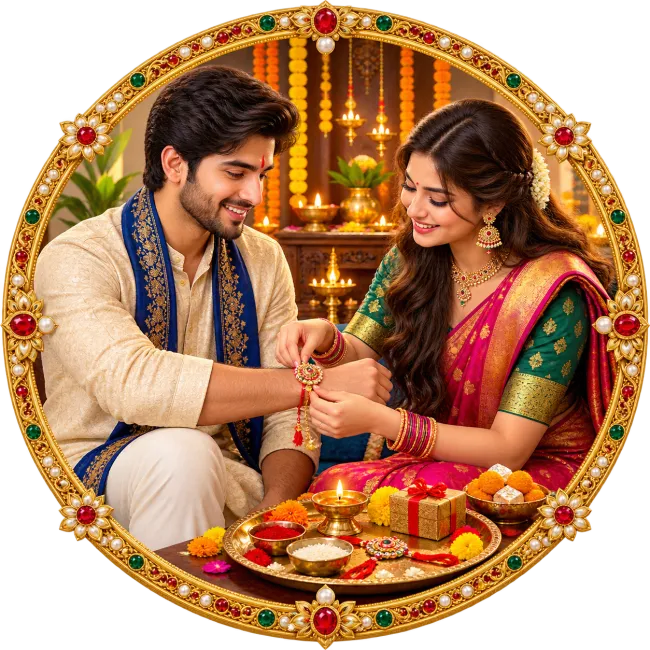
Over time, Raksha Bandhan developed into an important family and cultural festival. Sisters tie a Rakhi around their brothers’ wrists and pray for their long life, good health, happiness, success, and prosperity. In return, brothers give gifts and promise to stand by their sisters in every situation. In modern times, the festival is also celebrated between cousins, friends, soldiers, and people who share a meaningful bond. Thus, Raksha Bandhan continues to spread the timeless message of love, unity, protection, and social harmony.
Raksha Bandhan is one of the most cherished festivals of India, celebrating the beautiful relationship between brothers and sisters. Its history goes back to ancient times and is associated with numerous religious legends, cultural traditions, and historical accounts. The festival is observed on Shravan Purnima, when sisters perform a traditional ritual, apply a tilak to their brothers’ foreheads, tie a sacred Rakhi around their wrists, offer sweets, and pray for their well-being. Brothers, in return, present gifts and take a heartfelt vow to protect, respect, and support their sisters throughout life.
One of the most popular stories connected with Raksha Bandhan is that of Lord Krishna and Draupadi. According to the traditional legend, when Lord Krishna injured his finger, Draupadi immediately tore a piece of cloth from her garment and tied it around his wound. Touched by her sincere affection, Krishna promised to protect her whenever she faced difficulty. This story presents Rakhi as a symbol of selfless love, devotion, and divine protection.
Another significant legend is associated with Goddess Lakshmi and King Bali. According to Hindu tradition, Lord Vishnu went to protect his devotee, King Bali, and remained in his kingdom. Goddess Lakshmi wished for Lord Vishnu to return to Vaikuntha, so she tied a sacred thread around King Bali’s wrist and accepted him as her brother. King Bali was moved by her affection and granted her wish. This story shows how the bond of Rakhi can create a relationship of love and respect even between people who are not related by birth.
The festival is also linked with the story of Lord Indra and his wife, Indrani. During a difficult battle between the gods and demons, Indrani prepared a sacred protective thread with prayers and tied it around Indra’s wrist. Blessed with spiritual strength and divine protection, Indra went into battle with renewed courage. This legend suggests that the early tradition of tying a sacred thread was not restricted to brothers and sisters but was also connected with blessings, protection, courage, and victory.
Another traditional reference is found in the story of Yama, the god of death, and his sister Yamuna. It is believed that Yamuna tied a sacred thread around Yama’s wrist and welcomed him with love and devotion. Pleased by her affection, Yama blessed her and declared that anyone who receives a Rakhi with sincere love and promises protection will be blessed with happiness and longevity. This story further strengthens the festival’s association with a long life, well-being, and sibling affection.
Raksha Bandhan has also been associated with several historical narratives. One widely told account relates to Queen Karnavati of Mewar and Mughal Emperor Humayun. It is believed that when Queen Karnavati feared an attack on her kingdom, she sent a Rakhi to Humayun and requested his protection. Although historians debate some details of this story, it remains a popular cultural example of Rakhi being used as a symbol of trust, honour, and responsibility beyond religious and political differences.
The festival later gained a wider social meaning during India’s freedom movement. Rabindranath Tagore encouraged people to celebrate Raksha Bandhan as a symbol of unity and communal harmony. People from different communities tied sacred threads to one another to express brotherhood, mutual respect, and solidarity. In this way, Raksha Bandhan became not only a family celebration but also a powerful message of social unity and peaceful coexistence.
In earlier times, Rakhi was regarded as a protective thread blessed with prayers and positive spiritual energy. It was sometimes tied by priests, wives, sisters, or other well-wishers for safety, success, and prosperity. Gradually, the tradition became closely associated with the loving relationship between brothers and sisters. However, its broader meaning remains unchanged: anyone who ties or accepts a Rakhi becomes connected through a sacred promise of care, dignity, and protection.