Mahashivratri Vrat Katha
Mahashivratri Vrat Katha describes the divine glory of Lord Shiva and explains how sincere fasting, worship, and night-long devotion can free a person from sins, fear, and negative influences. The most popular story is about a hunter who unknowingly observed the Mahashivratri fast and offered bel leaves and water to a Shivling while staying awake throughout the night. Although his worship was unintentional, Lord Shiva was pleased by his devotion, compassion, and self-control. The story teaches that Mahadev values a pure heart more than elaborate rituals. Observing the Mahashivratri vrat with faith is believed to bring inner peace, spiritual progress, protection, prosperity, and the blessings of Lord Shiva and Goddess Parvati.
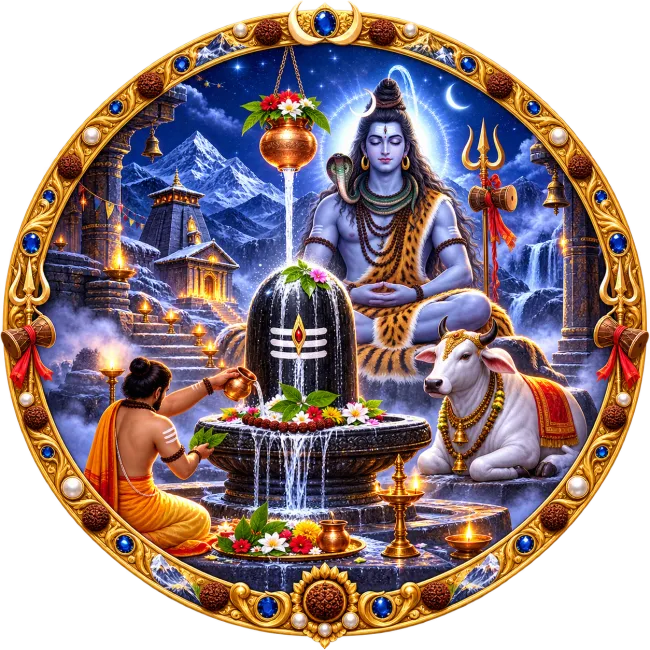
Mahashivratri is one of the most sacred festivals dedicated to Lord Shiva. Devotees observe a fast, worship the Shivling with water, milk, bel leaves, flowers, and other sacred offerings, chant “Om Namah Shivaya,” and remain awake during the night. Reading or listening to the Mahashivratri Vrat Katha is considered an essential part of the worship because it reveals the spiritual significance and divine rewards associated with the vrat.
According to the traditional story, a hunter named Lubdhak went into a forest in search of food. When darkness fell, he climbed a bel tree near a pond to protect himself from wild animals. Unknown to him, a Shivling was situated beneath the tree. To stay awake, he kept plucking bel leaves and dropping them below. Water from a vessel tied around his waist also fell upon the Shivling. In this way, he unknowingly performed Lord Shiva’s abhishek, offered bel leaves, observed a fast, and remained awake throughout the sacred night.
During the night, several deer approached the pond. Each requested the hunter to allow it to return to its family before surrendering itself. Their truthful and compassionate words gradually transformed the hunter’s heart. Eventually, he abandoned violence and allowed them to go. Lord Shiva was deeply pleased with his fasting, night vigil, offerings, and awakening of compassion. Mahadev blessed him and freed him from the burden of his past actions.
The Mahashivratri Vrat Katha teaches that true worship is not limited to external rituals. Purity of intention, kindness, truthfulness, self-discipline, and compassion are the real forms of devotion. Even an ordinary person can receive Lord Shiva’s grace by giving up anger, ego, greed, and violence.
Devotees traditionally begin the vrat after taking a morning bath and making a sincere sankalp. The Shivling is worshipped during the four prahar of the night with water, milk, curd, honey, ghee, sugar, bel leaves, dhatura, flowers, and fruits. The vrat katha is read or heard, Shiva mantras are chanted, and aarti is performed. The fast is concluded the following morning after worship, charity, and offering food according to one’s capacity.
According to Har Ghar Pandit Ji, Mahashivratri should be observed not only as a religious fast but also as a journey of inner purification. Devotees should spend the day with peaceful thoughts, speak truthfully, help someone in need, and pray to Mahadev for wisdom rather than only material desires. When worship is performed with faith and humility, even a simple offering of water and bel leaves becomes deeply meaningful.
Mahashivratri Vrat Katha reminds us that Lord Shiva is Ashutosh—the deity who is easily pleased by sincere devotion. Reading or listening to this sacred story with faith is believed to remove negativity, strengthen the mind, improve harmony in life, and guide devotees toward spiritual awakening and liberation.