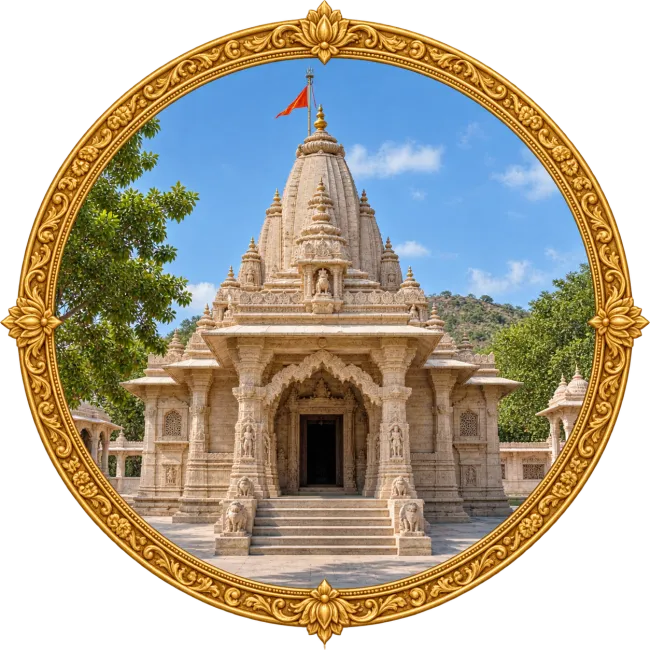
Nilkanth Dham Temple, Poicha, Gujarat
Visit Nilkanth Dham Temple in Poicha, Gujarat—an impressive spiritual and cultural complex situated on the sacred banks of the Narmada River. Known for its magnificent architecture, beautifully decorated deities, thematic gardens, daily aartis and peaceful surroundings, the temple attracts devotees and tourists from across India.
About Nilkanth Dham Temple, Poicha
Nilkanth Dham, also known as Poicha Swaminarayan Temple, is located in Poicha village in the Narmada district of Gujarat. It is a major spiritual and cultural complex built by Shree Swaminarayan Gurukul Rajkot Sansthan.
Despite sometimes being called Nilkanth Mahadev Temple, the principal deity of this temple is Shri Nilkanth Varnindra Bhagwan—the youthful ascetic form of Bhagwan Swaminarayan. Nilkanth Varni was the name used by Bhagwan Swaminarayan during his seven-year spiritual journey across India.
The temple complex also contains a separate shrine dedicated to Narmadeshwar Mahadev, where a naturally formed Narmada Shivling is worshipped.
Spread across 108 acres, Nilkanth Dham includes the main mandir, Nilkanth Sarovar, thematic gardens, Sahajanand cultural exhibition, Gaudham, Sanskrit Gurukul, restaurants, accommodation facilities and several smaller shrines.
History of Nilkanth Dham Temple
Nilkanth Dham was constructed by Shree Swaminarayan Gurukul Rajkot Sansthan under the guidance of Shree Dharmavallabhdasji Swami. Its development was inspired by Guruvarya Shree Devkrushnadasji Swami and the spiritual vision of Sadguru Shastriji Maharaj Shree Dharmajivandasji Swami.
The temple was officially inaugurated on 28 October 2013 by Guruvarya Shree Devkrushnadasji Swami. The murti pran pratishtha ceremony was performed by Shree Rakeshprasadji Maharaj, Acharya of the Laxmi Narayan Dev Gadi, in the presence of saints and devotees.
Shree Swaminarayan Gurukul Rajkot Sansthan, which constructed and manages the temple, was established in Rajkot in 1948 by Sadguru Shastriji Maharaj Shree Dharmajivandasji Swami.
Nilkanth Dham was developed as more than a conventional temple. It was envisioned as a complete pilgrimage centre combining worship, spiritual education, cow protection, Sanskrit learning, cultural exhibitions and hospitality for pilgrims.
Religious Significance of Nilkanth Dham
Nilkanth Dham is dedicated to Shri Nilkanth Varnindra Bhagwan, representing the youthful ascetic form of Bhagwan Swaminarayan.
Bhagwan Swaminarayan left his home at the age of 11 and travelled across India as Nilkanth Varni. His spiritual journey continued for seven years and covered more than 12,000 kilometres. During this period, he visited sacred places, met saints and performed intense spiritual practices.
Nilkanth Dham celebrates his devotion, renunciation, courage and commitment to the welfare of humanity. Devotees visit the temple to seek blessings for inner peace, spiritual discipline, family harmony and protection from difficulties.
Its location on the northern bank of the Narmada River further increases its religious importance. The Narmada is worshipped as a sacred river and Divine Mother in Hindu tradition.
Main Deity of Nilkanth Dham
The principal deity is Shri Nilkanth Varnindra Bhagwan. The sacred murti represents Bhagwan Swaminarayan in his youthful ascetic form as Nilkanth Varni.
The deity is worshipped through several daily rituals, including Mangala Aarti, Abhishek, Rajopchar Poojan, Rajbhog Aarti, Maha Aarti and Shayan Aarti.
The murti is beautifully decorated with colourful garments, ornaments, flowers and seasonal designs. Special decorations are prepared during festivals and important religious celebrations.
Important Shrines Inside Nilkanth Dham
Shri Nilkanth Varnindra Bhagwan
The principal shrine is dedicated to Nilkanth Varni, the youthful ascetic form of Bhagwan Swaminarayan.
Radha-Krishna Bhagwan
The divine forms of Radha and Krishna represent unconditional devotion and eternal spiritual love.
Lakshmi-Narayan Bhagwan
Lord Vishnu and Goddess Lakshmi are worshipped together as the divine symbols of dharma, protection and prosperity.
Bal Ghanshyam Lala
This shrine presents Bhagwan Swaminarayan in his childhood form as Ghanshyam Maharaj.
Kashtbhanjan Hanumanji
Lord Hanuman is worshipped as Kashtbhanjan Dev, the divine protector who removes fear, difficulties and negative influences.
Narmadeshwar Mahadev
The Narmadeshwar Mahadev shrine contains a sacred Shivling originating from the Narmada River. Devotees offer water, milk, flowers and bilva leaves to Lord Shiva.
Shri Ganeshji
Lord Ganesha is worshipped as the remover of obstacles and the giver of wisdom and auspicious beginnings.
Sheshashayi Vishnu
This shrine depicts Lord Vishnu resting on Sheshnag in the cosmic ocean.
Twenty-Four Avatars
The temple’s pradakshina path presents the 24 divine incarnations of Lord Narayan, allowing devotees to have darshan of different forms during circumambulation.
Architecture of Nilkanth Dham
Nilkanth Dham is known for its grand traditional Hindu architecture and detailed stone craftsmanship. The temple has multiple carved shikhars, pillars, domes, balconies and decorative sculptures.
Important architectural features include:
- Traditional Hindu temple design
- Detailed carvings of deities and sacred symbols
- Large central prayer and darshan area
- Multiple shikhars and ornamental domes
- Spacious pradakshina paths
- Sculptures of the 24 avatars of Lord Narayan
- Nilkanth Sarovar surrounding the main monument
- 108 Gaumukhs releasing Narmada water
- Beautifully landscaped gardens
- Illuminated temple structures during the evening
The temple becomes especially attractive after sunset when the complex is decorated with colourful lights.
Nilkanth Sarovar
Nilkanth Sarovar is one of the most distinctive features of the temple complex. It contains sacred water from the Narmada River and surrounds part of the main monument.
The sarovar has 108 Gaumukhs, representing sacred names and spiritual symbolism. Water flowing through these cow-shaped outlets creates a peaceful and devotional environment.
Visitors should follow safety instructions and avoid entering restricted sections of the sarovar.
Thematic Gardens
Nilkanth Dham contains two major thematic gardens that present stories from Hindu tradition through statues and landscaped displays.
Nilkanth Leela Udyan
Nilkanth Leela Udyan presents important moments from the spiritual journey of Nilkanth Varni. The displays highlight his renunciation, meditation, travels and devotion.
Rasleela Udyan
Rasleela Udyan contains scenes connected with Lord Krishna, including his childhood activities, devotion of the gopis and important events from Krishna Leela.
The gardens are suitable for families and help children understand religious stories through visual presentations.
Nilkanth Dham Temple Timings
Nilkanth Dham remains open every day throughout the year.
The official darshan period is from 06:00 AM to 08:30 PM. Individual ritual timings may change during different seasons and major festivals. Visitors should confirm the schedule before travelling.
Daily Puja and Aarti Timings
Main Aarti Timings
Six important aartis are performed during the day:
Morning Aarti
The first aarti of the day is Mangala Aarti at 06:00 AM. Devotees wishing to experience peaceful morning worship should arrive before the scheduled time.
Evening Aarti
The Sandhya Maha Aarti is performed at 07:00 PM. It is one of the most beautiful daily rituals, with devotional music, illuminated lamps and collective prayers.
Best Darshan Time
The best time for peaceful morning darshan is from 07:00 AM to 09:00 AM. Visitors can attend Rajopchar Poojan, Shangar Aarti and Tulsi Charan Poojan during this period.
The best evening experience begins with the Nagar Yatra at 06:00 PM, followed by the Sandhya Maha Aarti at 07:00 PM.
Weekends, public holidays and major festivals generally attract larger crowds. Visitors seeking a quieter experience should plan their visit on a weekday morning.
Sahajanand Cultural Exhibition
Sahajanand Pradarshani is a cultural exhibition located inside the Nilkanth Dham complex. It presents the life, teachings and spiritual journey of Bhagwan Swaminarayan through sculptures, visual displays, dioramas and immersive experiences.
The exhibition is especially suitable for families and children. It helps visitors understand spiritual values, Indian culture and important events from the life of Bhagwan Swaminarayan.
The cultural exhibition requires a separate ticket.
Exhibition timings and ticket prices may be revised during special events.
Nauka Vihar
Boating facilities are available within the temple complex.
Visitors should follow all safety instructions provided by the boating staff.
Durlabh Darshan
Durlabh Darshan is an immersive 6D virtual pilgrimage experience available inside the temple complex. It presents important spiritual destinations and devotional experiences using modern visual technology.
The experience is suitable for families, children, groups and elderly visitors who may not be able to travel to distant pilgrimage destinations.
Gaudham
Nilkanth Dham has a dedicated Gaudham where more than 200 Gir cows are cared for. Devotees can participate in Gau Puja and contribute to the feeding and protection of cows.
The Gaudham reflects the temple’s focus on traditional Indian values, animal welfare and selfless service.
Sanskrit Gurukul
Shri Dharmajivan Sanskrit Gurukul operates within the Nilkanth Dham complex. Students receive Vedic and modern education along with accommodation, meals and other essential facilities.
The Gurukul works to preserve Sanskrit learning, Hindu scriptures and traditional spiritual education.
Offerings and Prasad
Devotees can participate in different religious offerings and sevas, including:
- Abhishek Seva
- Kalash Puja
- Tulsi Charan Poojan
- Rajbhog Thal
- Annakut Seva
- Gau Puja and Gau Seva
- Brahm Bhojan
- Food donation
- General temple donation
- Flowers, fruits and sweets
Sattvik food and prasad are available at the temple’s designated dining facilities.
Major Festivals Celebrated at Nilkanth Dham
Kalyan Mahotsav
Kalyan Mahotsav is one of the principal celebrations at Nilkanth Dham. It begins during the Diwali period and includes special darshan, religious programmes, devotional music and spiritual gatherings.
Diwali and Annakut
The temple is beautifully illuminated during Diwali. On Annakut, a large variety of vegetarian dishes is arranged and offered to the deities.
Swaminarayan Jayanti
The birth anniversary of Bhagwan Swaminarayan is celebrated with special puja, aarti, devotional singing and religious discourses.
Janmashtami
Lord Krishna’s birth anniversary is celebrated with decorated darshan, kirtan, prayers and cultural programmes.
Ram Navami
Ram Navami is observed through special worship, scripture reading and devotional activities.
Guru Purnima
Devotees express gratitude towards the spiritual guru and participate in special satsang programmes.
Sharad Purnima
The temple organises devotional programmes and special worship on Sharad Purnima.
Entry Fee
General entry and darshan at Nilkanth Dham are free.
Separate charges apply to the following facilities:
- Sahajanand cultural exhibition
- Nauka Vihar
- Swimming pool
- Guest-house accommodation
- Paid parking
- Special religious sevas
Visitors should purchase tickets and make donations only at authorised counters.
Recommended Visit Duration
Visitors should reserve 3 to 5 hours to explore the main temple, gardens, shrines and Narmada riverbank.
A complete visit that includes the cultural exhibition, boating, Gaudham and evening aarti may require 6 to 8 hours. Families can also plan a full-day visit.
Best Time to Visit Nilkanth Dham
The best time to visit Nilkanth Dham is from October to March, when the weather is comfortable for exploring the large temple complex.
The evening period is especially beautiful because visitors can attend the Nagar Yatra and Maha Aarti and view the illuminated temple.
Summer afternoons can be extremely hot. During summer, visitors should prefer morning or evening hours.
Dress Code
Visitors should wear modest, clean and respectful clothing inside the temple complex.
Traditional Indian clothing or comfortable formal attire is suitable. Shorts, sleeveless clothes and revealing outfits should be avoided. Footwear must be removed before entering the designated worship areas.
Comfortable footwear is recommended for walking through the gardens and other outdoor sections of the complex.
Photography and Security Rules
Personal photography is permitted in authorised areas of the temple complex. Photography may be restricted inside the sanctum or during specific rituals.
Commercial photography, professional video recording and drone operations require prior written permission. Requests for professional shoots should be submitted before the planned visit.
Visitors should follow instructions displayed within the complex and cooperate with temple security.
Facilities Available at Nilkanth Dham
The temple provides several facilities for pilgrims and tourists:
- Free drinking water
- Clean toilets
- Wheelchair assistance
- Sattvik dining facilities
- Prasad counters
- Guest-house accommodation
- Paid vehicle parking
- Religious book and souvenir store
- Family cooking area
- Swimming pool
- Boating facility
- Cultural exhibition
- Satsang hall
- Security assistance
- Gaudham
- Sanskrit Gurukul
- Gardens and seating spaces
Accommodation at Nilkanth Dham
Accommodation is available at Tirthalayam, the temple’s guest-house facility near the Narmada River.
Different types of rooms may be available for individuals, families and groups. Visitors planning an overnight stay should book their accommodation in advance, especially during weekends, holidays and festivals.
How to Reach Nilkanth Dham
Nilkanth Dham is located at Poicha village, via Rajpipla, Narmada district, Gujarat – 393145.
By Air
Vadodara Airport is the nearest major airport, situated approximately 70 kilometres from Nilkanth Dham. Taxis and private vehicles are available from Vadodara to Poicha.
Ahmedabad International Airport can also be used by visitors arriving from distant cities.
By Train
The most convenient major railway station is Vadodara Junction, located approximately 70 kilometres from the temple.
Rajpipla is the nearest town with regional transport connections. Visitors can hire a taxi or use a bus from Vadodara, Bharuch or Rajpipla.
By Road
Nilkanth Dham is well connected by road with Vadodara, Bharuch, Rajpipla and Kevadia.
Approximate distances are:
State transport buses, private buses, taxis and personal vehicles can be used to reach Poicha.
Nearby Places to Visit
Narmada Riverbank
The peaceful Narmada riverbank is located beside the temple and is ideal for prayer, meditation and enjoying the natural surroundings.
Murli Sangam
Murli Sangam is located 0.5 kilometre from Nilkanth Dham and is known as the meeting point of sacred water streams.
Kuber Bhandari Temple
Kuber Bhandari Temple is an ancient shrine situated on the banks of the Narmada. It is 1.5 kilometres away by boat and 18 kilometres away by road.
Hanumanteshwar Temple
Hanumanteshwar is an ancient shrine dedicated to Lord Hanuman, located 5 kilometres from Nilkanth Dham.
Vyas Bet
Vyas Bet is a sacred island traditionally associated with Maharishi Ved Vyasa. It is located 14 kilometres from the temple.
Statue of Unity
The Statue of Unity is situated 39 kilometres from Nilkanth Dham. Visitors can include both destinations in the same trip.
Shoolpaneshwar Mahadev Temple
Shoolpaneshwar Mahadev Temple is an important Shiva shrine situated near the Statue of Unity and Sardar Sarovar region.
Important Tips for Visitors
- Nilkanth Dham Poicha is primarily dedicated to Shri Nilkanth Varnindra Bhagwan, not Lord Shiva.
- A separate Narmadeshwar Mahadev shrine is present inside the complex.
- General temple darshan is free.
- Arrive before 06:00 AM to attend Mangala Aarti.
- Reach before 07:00 PM to attend the evening Maha Aarti.
- Reserve sufficient time because the complex is spread across 108 acres.
- Wear comfortable clothing and footwear.
- Remove footwear before entering designated worship areas.
- Use authorised counters for tickets, donations and puja bookings.
- Book accommodation in advance during weekends and festivals.
- Supervise children near the sarovar, boating area and Narmada riverbank.
- Obtain written permission for commercial photography or drone recording.
- Check the current schedule before travelling because ritual timings may change seasonally.
- Maintain cleanliness and avoid carrying prohibited items inside the temple.
Conclusion
Nilkanth Dham Temple in Poicha is a magnificent spiritual and cultural destination situated on the sacred banks of the Narmada River. Built by Shree Swaminarayan Gurukul Rajkot Sansthan and inaugurated in 2013, the temple is dedicated to Shri Nilkanth Varnindra Bhagwan, the youthful ascetic form of Bhagwan Swaminarayan.
Its grand architecture, daily aartis, Nilkanth Sarovar, thematic gardens, Narmadeshwar Mahadev shrine, Gaudham, Sanskrit Gurukul and cultural exhibition make it a complete pilgrimage destination for devotees and families. A visit to Nilkanth Dham offers a meaningful combination of devotion, culture, education and spiritual peace.